How Important is the Poem

Simone Weil writes in her spiritual autobiography Waiting for God : “I discovered the poem called “love” by George Herbert. I learned it by heart. Often at the culminating point of a violent headache I make myself say it over concentrating all my attention upon it and clinging with all my soul to the tenderness it enshrines. I used to think I was merely reciting it as a beautiful poem, but without my knowing it the recitation had the virtue of a prayer. It was during one of these recitations that, as I told you, Christ himself came down and took possession of me.”

LOVE III

George Herbert

Love bade me welcome; yet my soul drew back,
    Guilty of dust and sin.
But quick-eyed Love, observing me grow slack
    From my first entrance in,
Drew nearer to me, sweetly questioning,
    If I lacked anything.

A guest, I answered, worthy to be here.
    Love said, “You shall be he.”
I the unkind, ungrateful?  Ah, my dear,
    I cannot look on thee.
Love took my hand, and smiling did reply,
    “Who made the eyes but I?”

Truth Lord, but I have marred them; let my shame
    Go where it doth deserve.
“And know you not,” says Love, “who bore the blame?”
    My dear, then I will serve.
“You must sit down,” says Love, “and taste my meat.”
    So I did sit and eat.

Sources: Waiting for God by Simone Weil (Harpers, 2001)
George Herbert and the Seventeenth-Century Religious Poets  (W. W. Norton and Company, Inc., 1978)

Pentecost and Allergic Reactions

John 3:8

The wind blows where it will and you hear the sound of it, but do not know where it comes from and where it is going; so is everyone who is born of the Spirit.

pollen-helps-allergies-phot

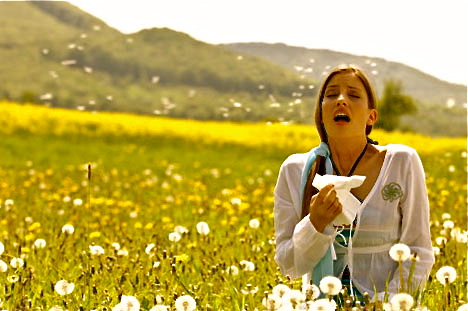
There is a lot of talk in Christianity of the spirit being like the wind. The wind blowing from many directions, claiming to be “Christian” wind, seems to carry a lot of allergens for folks today. And writing explicitly Christian stuff in the public sphere has reminded me of this lately.

My personal audience, for starters. I have a lot of friends on Facebook who are not Christian or religious and might either describe themselves outright as atheists, agnostics or perhaps identify with the rising group of “nones,” those who answer “none” when asked about their religious affiliation on various questionnaires (which does not mean they believe in nothing–often quite the opposite–they just don’t find a form that fits). Despite the fact that my connection to Christianity just might discomfort some, my nice friends seem not to have unfriended me en masse. I’m sure many must just skip over my overly religious or Christian posts, which is fine.

But as I changed my background picture yesterday to an image of the apostles with tongues of flame over their heads, I wondered, what do people think this is about? What do they think I think this is about? And really, it is a very good question to revisit regularly.

It is Pentecost Sunday, and I have already preached this morning to my beloved congregation, my proverbial choir, about the Holy Spirit and the task each individual human being has to engage with spirit and bring the spirit alive on the earth, each in our own way and revelation. I think of this as a universal message; to me, Christianity is not an exclusive club but the antithesis: an impulse set into the world by the one-time incarnation of the divine friend of humanity, the Son of God, who made himself to be the Son of Humanity so that each one of us would have the ability to find God stirring in our own centers, and through this find a way to a new wholeness and revelation for the world. Indeed for all of creation (see Paul’s letter to the Romans 8:18-23)!

We have a big job. Get free. Really free. Like, Nina Simone “I wish I knew how it would feel to be free” kind of free. Only in freedom is love with a big L possible. Only in freedom do we begin to understand the mystery of this incredible palette of human beings spread across the world, every single one of us a unique creation.

This is what Christianity means to me, and it does not exclude any other path, religious or not, that any one individual might choose, unless that path prevents other people from being free.

I too am allergic to religious words that ride the winds, which do not seem to be in harmony with my own constitution, which portray Christianity as anything but revolutionarily inclusive. I decided a long time ago not to waste my energy fighting against those particulates or trying to block out the wind altogether, but rather to find what strengthens my own immune system, the center of my being where I can know the truth for myself, and the center out of which I can meet the dynamic, beautiful, changing world with discernment and love.

Free Booklets from Floris Books!

Who doesn’t love free stuff? Especially when that free stuff is a real treasure? Our press in England has made a bunch of our classic introductory literature accessible online for free in PDF format! Titles include:

The Christian Community: An  Introduction, by Louise Madsen

The Eucharist, by Rudolf Frieling

The Essence of Christianity, by Rudolf Frieling

Priests Today: A New Understanding of the Task, by Ann Christine Klemm

The Gospel Readings in the Cycle of the Year, by Hans-Werner Schroeder 

Rituals Around Death, by John Baum

The Sacrament of Baptism, by Jens-Peter Linde

The Sacrament of Consultation: the Path into Communion, by Tom Ravetz

Here is the link! Enjoy reading!

Free Christian Community PDFs

What the angels will ask

The angels, when I return to their lofty realms, are going to want a full report:
What was it like that Monday morning when you awoke to summer sun and birdsong?
You and the cat in the backyard with the breezes and songs caressing your skin and ears and eyes with delight? As you struggled to learn how to really see the birds, each in their own wondrous design, color and wings, chirps, calls and songs? Lukewarm cup of coffee, apple blossoms, and light? The river hustling along, the leaves breaking through and clothing the earth in green? Tell us everything… Our longing is to know the earth as you have known, complete. Leave nothing out, your life is our dream!

Abide in Joy

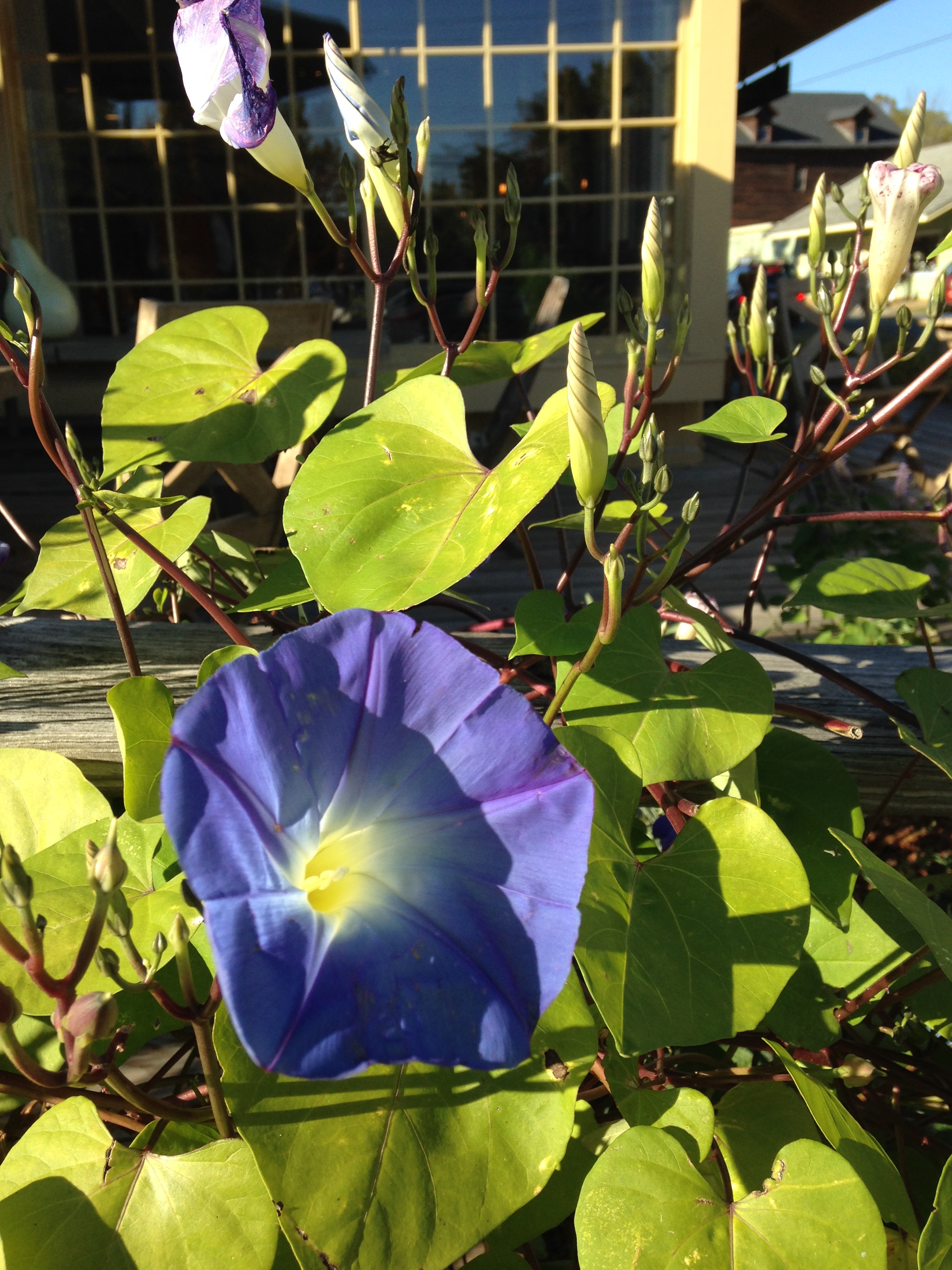
mornin' gloryJohn 15

“I am the true vine, and My Father is the vinedresser. Every branch in Me that does not bear fruit, He takes away; and every branch that bears fruit, He prunes it so that it may bear more fruit. You are already cleansed because of the word which I have spoken to you. Abide in Me, and I in you. As the branch cannot bear fruit of itself unless it abides in the vine, so neither can you unless you abide in Me. I am the vine, you are the branches; he who abides in Me and I in him, he bears much fruit, for apart from Me you can do nothing. If anyone does not abide in Me, he is thrown away as a branch and dries up; and they gather them, and cast them into the fire and they are burned. If you abide in Me, and My words abide in you, ask whatever you wish, and it will be done for you. My Father is glorified by this, that you bear much fruit, and so prove to be My disciples. Just as the Father has loved Me, I have also loved you; abide in My love. 10 If you keep My commandments, you will abide in My love; just as I have kept My Father’s commandments and abide in His love. 11 These things I have spoken to you so that My joy may be in you, and that your joy may be made full.


The true vine is a picture of a living thing which connects to even more life—to the source of life. What connects us to life? What makes us feel most alive? If we look to children, the answer for them is: everything! They love all of life, all of what it offers them. Small children love it without reservation, and take whatever they can into their mouths. They want to connect with life in their inmost being!

As we grow up, we come to ourselves as we experience disappointments, losses, suffer pain, and bear death. This belongs to our path on earth—this schooling through pain that brings us to ourselves, connects us to our self. But this can go too far. The winter can be so very long– we get cabin fever stuck inside with ourselves. Life can feel far away from us. We can feel totally cut off from life and love, disconnected.

Easter offers us a return to life. During Passiontide, we have walked with Christ as he goes to his death on the cross. We could also say—we have walked with Christ as he walked with us to the cross. At Easter, we are released from the permanency of this death. The grave can become an altar at which we offer ourselves to be transformed, and seek renewal.

We can find a new lease on life. The soul reconnected feels joy. Easter is the festival of joy. This is more than mere happiness or pleasure, though it encompasses both. Joy belongs to those who walk through death to a new connectedness, and a new life.When we feel joy, we have so much to offer.

At Easter, in the upswing of joy, Christ reminds us in this reading from John 15 of the power of staying connected to our true source of life, to the divine. The word he uses repeatedly is ABIDE. Abide in me and I in you, as I abide in the Father. Let my Word abide in you. To abide is not only to stay or remain, but to make one’s abode within him. To make one’s dwelling, one’s home within his life, within his joy, within God.

This is an act which we practice in praying, in turning to the spirit, in seeking everywhere in life for the source of life, and of becoming. In turning to that which brings joy and by offering ourselves in joy to the world wherever and whenever we can.

Snow Late in April

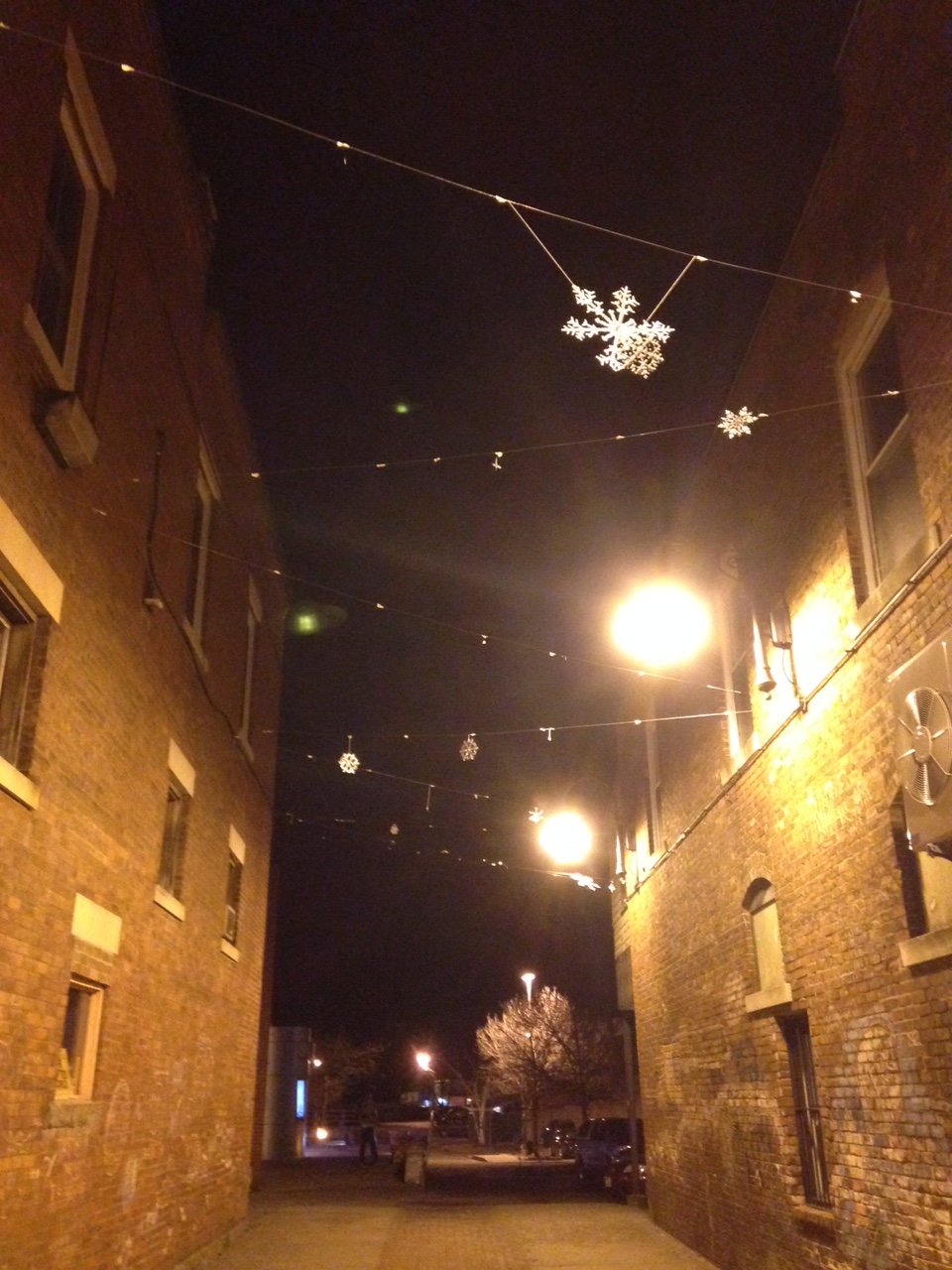
snowflakes in april

It seems that the blessed beings of the starry realms have so much to say this year
that they keep sending their tiny white star envelopes
to earth. It seems that the earth
needs these crystalline messages, these ambassadors of harmony
and an architecture of love and goodness of form
to heal the disintegrations and decimations of these
that have the world, as it were, in a bit of a grip.
It seems that snow is necessary in this Eastertime
when we are to practice resurrection, to reengender hope,
to strengthen our faith in one another and in a world
of human beings who, though we take so many wrong turns
on the way to life, mean well, want the world to be a place
of blessing, not only for itself, but for the cosmic world which rings us round.
It might take a little practicing, but I say, practicing,
thank you for snow.

The Good Shepherd

John 10

Heinrich Kirchner der Gute Hirte the Good Shepherd Erlangen GermanyThe compassion Christ feels for us human beings is expressed in the Matthew gospel: “He saw a large crowd, and he felt compassion for them because they were distressed and dispirited like sheep without a shepherd.” (Matthew 9) Christ sees us; sees that we are scattered by life’s challenges in so many ways—outwardly and inwardly. We have not yet learned well enough how to guide ourselves to the waterside, to rest and true nourishment, nor how to protect ourselves from wolves. We are not yet sovereign in the pastoral realm, especially with ourselves. We have so much to learn.

It is perhaps uncomfortable though to think of ourselves as sheep; or of the community as a flock of sheep. It may also be awkward to think of the priest as a “Shepherd of Souls,” as it says in our Ordination service. But this is a transitional arrangement intended to facilitate coming into true communion with the one called the Good Shepherd.

We can think of the many references in the Bible to the one we call the Good Shepherd, especially the beautiful 23rd Psalm: The Lord is my Shepherd. Here is depicted a description of the one who enacts a radical act–he recognizes the divine power that is meant to arise within the human being. He comes to be a shepherd for us that there might awaken IN us the true shepherd, the capacity to lead ourselves to green pastures and still waters, and to lead ourselves along the path which is right for each one of us. He is the one who shall be with us as we walk through the valley of death’s dark shadow, on this side of the threshold or the other, and the one who, no matter what all is going on in our lives, amidst all the evil and before our enemies, prepares for us a table—a healing feast! At this table, bread is broken and shared, wine is blessed and given, true peace is planted in our souls. He gives to us the medicine that makes us whole, that makes it possible for us to become ourselves shepherds.

This Shepherd will not leave us because he has given himself to us until the end of time. This Shepherd laid down his own life for ours, and seeks to unite himself with us if we but recognize his voice. He goes looking for the one lost sheep out of a hundred. Every one of us is that important to the Good Shepherd. He calls us home! He comes to find us! Let us be found.